

Daily Chemical Blow Molding Machine
SUZHOU BESTAR BLOW MOLDING MACHINERY Co., Ltd, located in Zhangjiagang city, Jiangsu Province, is a notable member of the BEIER MACHINERY GROUP. Established in 1998, BEIER MACHINERY GROUP has grown into one of China’s largest plastic machinery manufacturers. Their operations span over 120,000 square meters and employ more than 400 staff members.
Product Range
BESTAR’s blow molding machines are designed to produce HDPE and PP articles, which are essential for various applications such as: food and beverage packaging, daily chemical products packaging, chemical stacking barrels, and automobile engine oil packaging. The machines can handle volumes ranging from 20ml to 30L, catering to diverse production needs.
Advanced Technology
BESTAR's blow molding machines use advanced MC-ML (multiple cavities multiple layers) technology, known for its efficiency and cost-effectiveness. This state-of-the-art technology helps to reduce each article′s production cost without compromising article′s quality or appearance.
Professional Installation
BESTAR offers comprehensive installation services through a trained team with extensive experience. The team is equipped with the necessary skills and tools to ensure efficient and reliable installation.
Quick Response
To minimize downtime, BESTAR has local professional service technicians positioned across the country. They aim to arrive on-site within 2 hours to provide prompt and effective maintenance solutions.
Accessories Supply
BESTAR maintains a large inventory of high-quality, original accessories and kits. All accessories are subjected to strict factory testing to ensure they meet specifications and support continual, trouble-free operation.
Leading Service
We have many years of industry experience, a complete production management, quality supervision, and sales service operation system. Whether you want to purchase Food Beverage Blow Molding Machine or Daily Chemical Blow Molding Machine, just email your requirements and we can customize the product for you.
What is a Daily Chemical Blow Molding Machine
A Daily Chemical Blow Molding Machine is a plastic machine used to produce plastic containers and bottles specifically for daily chemical products. The equipment usually uses thermoplastics as raw materials, and processes and produces plastic products for different industries through a certain plastic molding process. The machine consists of molds, a programmable logic controller, and mechanical and electronic instruments.


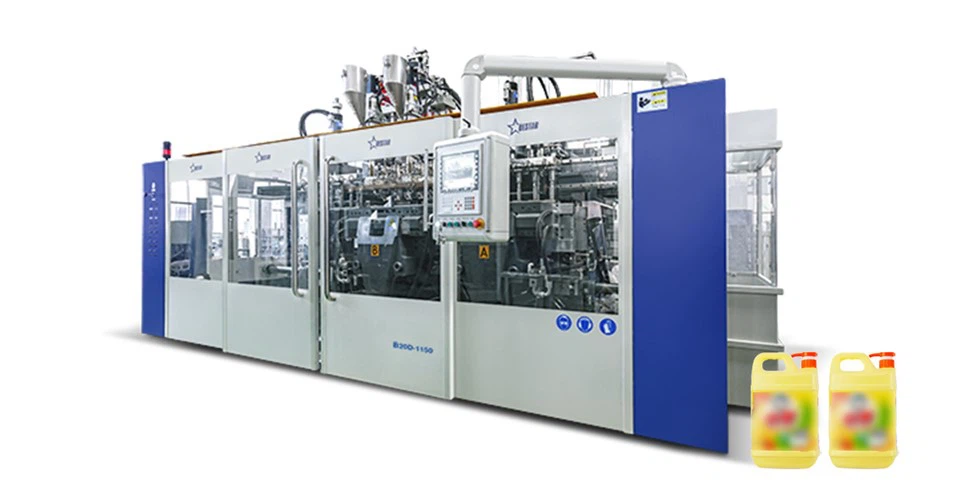
A Daily Chemical Blow Molding Machine is a plastic machine used to produce plastic containers and bottles specifically for daily chemical products. The equipment usually uses thermoplastics as raw materials, and processes and produces plastic products for different industries through a certain plastic molding process. The machine consists of molds, a programmable logic controller, and mechanical and electronic instruments.
Advantages of Daily Chemical Blow Molding Machines
Cost-Effective Production
One of the key advantages of Daily Chemical Blow Molding Machines is their cost-effectiveness in mass production. These machines allow for the creation of complex shapes and designs with minimal material waste. By utilizing the latest technology and automated processes, Daily Chemical Blow Molding Machines significantly reduce manufacturing costs, ensuring higher profit margins for businesses.
Versatility
Daily Chemical Blow Molding Machines offer versatility in terms of the types of products they can produce. From bottles, containers, and drums to automotive parts and industrial components, these machines are capable of manufacturing a wide range of products. The ability to adjust the parameters and settings of the machine allows for the creation of various shapes, sizes, and thicknesses, catering to diverse customer demands.
High Efficiency
With the advancement in machine technology, Daily Chemical Blow Molding Machines have become highly efficient in terms of production speed and accuracy. The automated processes, such as continuous extrusion and parison control, ensure consistent quality and uniformity in the final products. Additionally, the machines' quick cycle times enable manufacturers to meet high demand, resulting in increased productivity.
Environmentally Friendly
Daily Chemical Blow Molding Machines play a significant role in promoting environmental consciousness due to their ability to use recycled materials. By reusing plastic waste and employing eco-friendly manufacturing practices, these machines contribute to reducing carbon footprint and minimizing environmental impact.
Working Principle of Daily Chemical Blow Molding Machines


Plastic Resin Feeding or Charging
The first step in the blow molding process is plastic feeding. This is done by conveying the plastic pellets into the extruder hopper. Vacuum pumps draw pellets from big bags or bulk containers and transfer them into the raw material silos or hoppers. A rotary feeder at the bottom of the silo controls the rate of feeding into the plastifier or extruder. Compressed air is then used to convey the stored pellets to the extruder hopper. In other systems, plastic pellets from big bags or bins can be vacuum conveyed directly to the extruder hopper without the need for a separate conveying air system.
Plasticizing or Melting
As the plastic resin enters and goes through the extrusion machine, it is melted by continuous kneading and heating. Electric heating elements or heating bands are wrapped around the extruder barrel to provide heat for melting the polymer. The extruder screw has different sections that serve a specific purpose. These are feeding, compressing, and metering. The extruder screw is designed to provide sufficient shearing and compression to homogenize and extrude the plastic.
Parison Extrusion or Preform Injection
This process is the preparation of the parison or preform to be inflated. This is done by extruding the plastic through free extrusion or injection into a preform mold.
Sealing or Clamping
Sealing or clamping involves a split die that captures the preform. The ends of the parison (extrusion blow molding) are sealed except for one hole, typically the container opening, where the compressed air will be injected.
Inflation or Blow Molding
This step is where the plastic takes its form. Compressed air is introduced inside the preform. This inflates the preform until it is molded according to the profile of the die.
Cooling and Ejecting
The next step is the cooling process. Typically, as the plastic touches the die, it cools at a predefined rate which stabilizes the dimensions of the product. After cooling, the mold opens and ejects the product.
Trimming
Flashing is generally evident in extrusion blow molding. Most blow molding machines have auto deflashing features as the dies clamp the preform. But in some instances, flash is present at the top and bottom parts of the product, especially at the opening where compressed air is injected. This excess material is trimmed by a rotating knife. To minimize wastage, some systems collect the excess materials, grind them, and feed them back to the extrusion machine.
Leak Test
This is the typical quality control method used in manufacturing bottles or packaging materials. In this step, either vacuum or compression is generated inside the container. The machine will then check if air enters or escapes the container by monitoring the pressure. If a leak is sensed from the container, it is rejected and fed back into the system.
Other Secondary Processes and Packaging
Secondary processes include labeling, marking, and printing. After completing the secondary processes, the products are packed and distributed to manufacturers or end consumers.
High Density Polyethylene (HDPE)
HDPE is the world’s #1 plastic and the most commonly blow molded plastic material. It’s used in a vast array of products, including bottles for consumer liquids such as shampoo and motor oil, coolers, play structures, fuel tanks, industrial drums, and carrying cases. It’s molder-friendly, translucent and easily colored, and chemically inert (FDA approved and perhaps the safest of all plastics). PE the most commonly recycled resin with recycling code designation 2.
Low Density Polyethylene (LDPE)
Variations of LDPE include linear-low (LLDPE) and combinations with ethyl-vinyl-acetate (LDPE-EVA). LDPE is used for softer products that require a high level of stress crack resistance or flexibility. Generally, the higher the ethyl-vinyl-acetate (EVA) content, the softer the molded part. Common applications include squeeze bottles, traffic channelizers, and boat fenders. The highest usage is blown film for plastic bags. It is also molder-friendly, translucent and easily colored, chemically inert, and commonly recycled under code 4.
Polypropylene (PP)
PP is an extremely popular injection molding resin. PP is similar to HDPE, but slightly stiffer and lower density, which provides some advantages. PP is commonly used in elevated temperature applications, such as dishwasher tubes and medical parts that require autoclave sterilization. It’s molder-friendly as well as translucent and easily colored. Some clarified versions provide “contact clarity.” PP recycling is common under code 5.
Polyvinyl Chloride (PVC)
Although PVC is the world’s #3 plastic, it has been heavily scrutinized for using cadmium and lead as stabilizers, releasing hydrochloric (HCl) acids during processing, and releasing residual vinyl chloride monomers after molding (most of these problems have been reduced). PVC is translucent and comes in rigid and soft forms — the soft resin is typically used in blow molding. Common applications include soft medical parts, bellows, and traffic cones. Special processing equipment is recommended to prevent corrosion from HCl. PVC is recyclable under code 3.
Polyethylene Terephthalate (PET)
PET is a polyester that is usually injection blow molded into clear containers. While it isn’t impossible to extrusion blow mold PET, it is less common, as the resin requires extensive drying. The largest PET blow molding market is for soft drink and water bottles. PET recycling rates are growing under recycle code 1.
Thermoplastic Elastomers (TPE)
TPEs are used to replace natural rubber in molded parts. The material is opaque and can be colored (typically black). TPEs are commonly used in automotive suspension covers and air intake ducts, bellows, and grip surfaces. It molds well after drying and generally reprocesses well. However, recycling rates are somewhat limited under code 7 (other plastics).
Acrylonitrile Butadiene Styrene (ABS)
ABS is a relatively hard plastic, used to injection mold football helmets. Blow molding grade ABS is typically opaque and colored for use in electronics housings and small appliances. ABS molds well after drying. However, parts made from ABS aren’t as chemically resistant as PE or PP, so caution must be used with parts that come in contact with chemicals. ABS is recyclable as code 7, but its toughness makes grinding difficult.
Techniques for Mold Temperature Control in Daily Chemical Blow Molding Machines
Water cooling is the most common technique used for mold temperature control. Circulating water channels within the mold assembly help to dissipate heat and maintain a consistent temperature. The temperature of the circulating water can be adjusted using a chiller and controlled through a closed-loop system. Water-based cooling offers good heat transfer capabilities and is relatively cost-effective.
In some cases, oil-based temperature control is preferred over water-based systems. Oil has better heat retention properties, which can result in improved energy efficiency and temperature stability. However, oil-based systems are more expensive to install and maintain compared to water-based systems.
Electrically controlled heating and cooling systems provide precise temperature control for molds. Electric heaters and cooling plates are integrated into the mold assembly to regulate the temperature accurately. This technique offers fast and efficient temperature control but may be more expensive upfront.
Insulating the mold can help reduce energy consumption and improve temperature stability. Insulating materials such as thermal blankets and coatings minimize heat loss, ensuring consistent temperature conditions. Proper insulation also helps to prevent ambient temperature variations from affecting the mold.
Advanced Daily Chemical Blow Molding Machines are equipped with mold-temperature monitoring systems. These systems utilize sensors to continuously monitor and adjust the mold temperature as needed. Real-time feedback allows operators to make necessary adjustments to maintain optimal temperature conditions throughout the production process.
How to Choose a Daily Chemical Blow Molding Machine
The Daily Chemical Blow Molding Machine is a piece of equipment widely used in the production of plastic bottles. It can heat and blow plastic particles into plastic bottles of various shapes. Here are some things you need to pay attention to.
Understand the Types of Daily Chemical Blow Molding Machine
There are many different types of Daily Chemical Blow Molding Machines, including fully automatic blow molding machines and semi-automatic blow molding machines. When choosing a blow molding machine, you need to decide which type is best for your production based on your needs and budget.
Pay Attention to the Capacity and Size of the Machine
The capacity and size of the Daily Chemical Blow Molding Machine are also factors that need to be considered when purchasing. If you need to use the bottle blowing machine in large quantities, it is recommended to choose a machine with a larger capacity, which can improve production efficiency.
Confirm the Ease of Use of the Machine
When purchasing a Daily Chemical Blow Molding Machine, pay attention to the ease of use of the machine. A good bottle blowing machine should have a simple and easy-to-understand operating interface for users to get started. At the same time, you should also consider whether the cleaning and maintenance of the machine are convenient, which can reduce the trouble of daily use.
Consider After-Sales Service and Technical Support
Choosing a Daily Chemical Blow Molding Machine that suits you can bring great convenience to your life. You need to know whether the supplier provides timely after-sales service and technical support so that any problems encountered during use can be solved promptly.
Types of Daily Chemical Blow Molding Machines and Their Applications
Blow molding is a widely used manufacturing process for creating hollow plastic parts. It involves the production of plastic containers, bottles, and other hollow articles by inflating a heated plastic tube into a mold cavity. To carry out this process efficiently and accurately, blow molding machines are used. Here are different types of blow molding machines and their applications.
Extrusion Daily Chemical Blow Molding Machines
Extrusion Daily Chemical Blow Molding Machines are the most common type of blow molding machines in use today. This process involves melting plastic resin and injecting it into a mold through an extrusion head. The mold then closes, and compressed air is blown into the molten plastic, causing it to expand and take the shape of the mold cavity.
Applications: These machines are ideal for producing bottles, containers, automotive parts, and toys. The versatility of extrusion blow molding machines makes them suitable for various industries.
Injection Daily Chemical Blow Molding Machines
Injection Daily Chemical Blow Molding Machines combine the functionalities of injection molding and blow molding. In this process, a preform is first created using an injection molding machine. The preform is then transferred to a blow molding machine, where it is heated and stretched before being inflated to the desired shape.
Applications: These machines are widely used in the pharmaceutical and cosmetic industries for producing small bottles and containers with precise neck finishes and tight tolerances.
Stretch Daily Chemical Blow Molding Machines
Stretch Daily Chemical Blow Molding Machines are designed to create plastic bottles with exceptional clarity and strength. These machines employ a two-step process. Firstly, a preform is produced using injection molding, similar to the injection blow molding process. Then, the preform is transferred to the stretch blow molding machine, where it is reheated and stretched in both length and diameter. Compressed air is then blown into the preform, resulting in a finished bottle.
Applications: These machines are commonly used in the beverage industry for producing PET bottles, as well as in the personal care and home care industries.
Frequently Asked Questions
Find professional daily chemical blow molding machine manufacturers and suppliers in China here! Please feel free to buy high quality daily chemical blow molding machine for sale here from our factory. For more information, contact us now.
Inclined Neck Toilet Bottle Blow Moulding Machine, daily chemical blow molding machine, Laundry Detergent Bottle Blow Moulding Machine